Best Practices for Free English to Tagalog Translation Tools
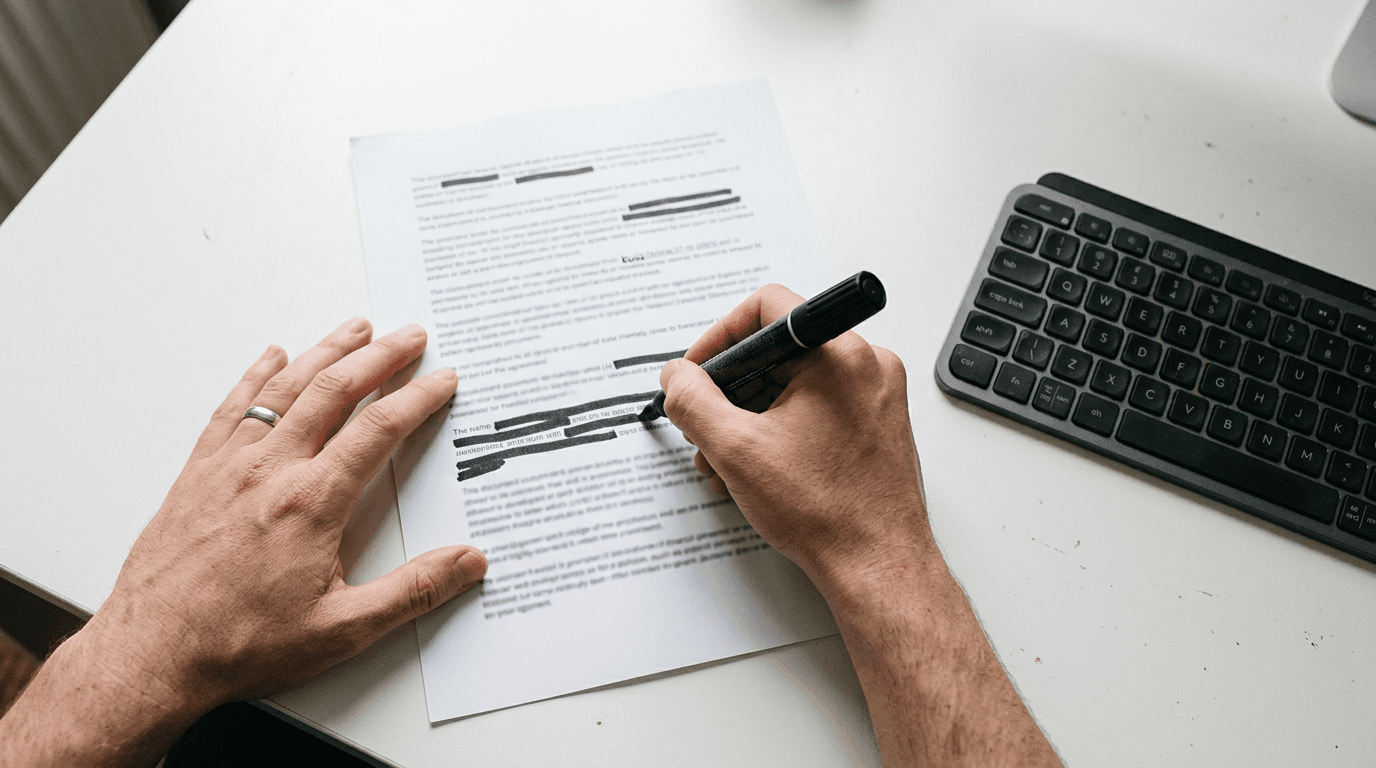
A case worker pastes a dense, two-page medical history into a browser window, oblivious to the fact that their client's sensitive data is now permanently logged on a public training server. This is the reality of using a free english to tagalog translation tool without a framework for risk. We evaluate these practices against two specific criteria: the permanence of the document being translated and the consequence of a misunderstanding. Every best practice below is designed to extract utility from algorithms while managing the inherent structural and privacy limits they present.
Quick Summary
Free machine translation provides rapid, surface-level comprehension for low-stakes scenarios, provided users actively manage data privacy and linguistic limits. Navigating these tools requires strict data hygiene, structural testing, and a firm boundary against high-stakes usage.
- Public translation engines retain user data, requiring aggressive manual redaction before input.
- Tagalog's unique syntax often causes structural collapse in algorithmic output, requiring reverse-translation tests.
- Machine output serves for document triage, never for actionable comprehension of legal or medical terms.
- Complex sentences must be manually segmented into discrete clauses to maintain basic algorithmic accuracy.
Table of Contents
- Comparison Table
- 1. Stripping Data Before Processing
- 2. Reversing Output for Structural Checks
- 3. Restricting Use to Document Triage
- 4. Segmenting Complex Sentences
- 5. Avoiding Idioms in Casual Chat
- 6. Isolating Transactional Queries
- 7. Recognising the High-Stakes Threshold
- Mapping Tools to Your Translation Context
- FAQ
- Recommended Reads
Comparison Table
| Practice | Ideal Scenario | Primary Limit |
|---|---|---|
| Data Stripping | Processing intake forms and raw case notes | Destroys grammatical context |
| Reverse Testing | Drafting basic community announcements | Fails to detect nuanced tonal shifts |
| Document Triage | Scanning high volumes of unverified mail | Optical character recognition hallucinates |
| Sentence Segmentation | Emailing overseas logistics partners | Results in robotic, abrasive communication |
| Avoiding Idioms | Daily social interactions and travel | Forces an unnaturally formal register |
| Transactional Queries | Seeking directions or basic pricing | Breaks entirely on conditional logic |
| Recognising Thresholds | Medical, legal, and financial settings | Requires immediate transition to a human |
1. Stripping Data Before Processing
Convenience often costs confidentiality
This practice is mandatory for healthcare providers, legal professionals, and case workers processing foreign documents on limited budgets. When you submit text to a public interface, the terms of service typically grant the provider the right to store, analyse, and reuse that input to train future linguistic models. A Tagalog intake form containing a patient's name, address, and underlying condition immediately becomes part of a global dataset.
The mechanism of protection is active redaction. Before processing anything, you must manually replace names with placeholders, strip dates of birth, and remove addresses. If you are handling documents governed by strict data handling frameworks, similar to the standards outlined in a comprehensive Privacy Policy | Lingua Franca Hub, feeding unredacted text into a browser window constitutes a breach.
The honest limit of this practice is context destruction. A heavily redacted legal or medical document often translates as a disjointed mess. Machine engines rely heavily on neighbouring words - including proper nouns - to determine sentence structure and verb tense. Stripping the identifying information protects the individual, but it significantly degrades the accuracy of the resulting text, leaving you with an uncertified document that requires heavy manual reconstruction.
2. Reversing Output for Structural Checks
Fluency in the target language masks root errors
This is a critical testing protocol for community organisers and casual users drafting public announcements. Tagalog employs a Verb-Subject-Object (VSO) structure and relies on heavy affixation and focus markers (such as ang and ng). A free tagalog to english translator routinely misidentifies the actor in a sentence, outputting an English phrase that sounds perfectly fluent but assigns the action to the wrong party.
The practice here is back-translation. Take the resulting English text and feed it back into the engine to produce Tagalog. This forces the algorithm to show its work. If the newly generated Tagalog text radically differs in meaning from your original input, the engine has misunderstood the root focus. You then adjust your source sentence to be simpler and run the cycle again.
Back-translation only catches catastrophic structural failures, not subtle tonal shifts. It provides a false sense of security for nuanced communications. Respect markers vital to Filipino culture, such as po and opo, are entirely flattened into standard English, and reversing the output will not restore them. You cannot use this method to verify whether a message sounds polite, only whether its basic logistics survived the transition.
3. Restricting Use to Document Triage
Categorisation is not comprehension
Government agencies and legal professionals receiving high volumes of uncertified foreign mail use this approach to manage backlogs. Triage is the practice of scanning a document solely to determine its broad category, not to read its specific clauses.
By running a smartphone camera over a printed document, a free translation philippines to english app uses optical character recognition (OCR) to overlay translated text onto the screen in real-time. This mechanism allows a clerk to quickly determine if they are holding a birth certificate, a rental lease, or a utility bill. You use the tool strictly to route the physical document to the correct department or desk for formal processing.
Practical rule: If a translated document dictates a legal, medical, or financial action, the machine translation is for routing the file to the right department, never for executing the terms.
OCR struggles immensely with faded ink, handwritten margin notes, and official governmental stamps. Relying on this visual overlay for actual comprehension invites operational disaster. When the camera cannot read a smeared word, the engine will often hallucinate a highly plausible but entirely fabricated word to fill the gap, creating terms or clauses that do not exist on the original paper.
4. Segmenting Complex Sentences

Algorithms choke on compound clauses
Corporate clients and individuals drafting emails to overseas partners must adopt this practice to avoid sending garbled instructions. Statistical and neural translation models perform best on short, highly predictable sentence structures. They rapidly lose their mapping accuracy when tracking objects across compound clauses.
When using a free translation english to tagalog engine, you must feed it one discrete clause at a time. Instead of typing, "We need to delay the shipment because the customs forms are incomplete, which means it will arrive next Tuesday," break it apart. Write: "The customs forms are incomplete. We must delay the shipment. It will arrive next Tuesday." This manual segmentation forces the engine to process individual subjects and verbs without losing track of the object mid-sentence.
The resulting communication sounds robotic, abrasive, and completely devoid of standard business etiquette. Segmenting works for transferring basic logistical data, but it destroys relationship-building nuance. Readers receiving these segmented, machine-translated emails often perceive the sender as demanding or aggressively blunt.
5. Avoiding Idioms in Casual Chat
Cultural metaphors do not survive algorithmic processing
International travellers and expatriates engaging in daily social interactions or community forums must strip their vocabulary of cultural shorthand. Algorithms map words to their closest statistical equivalent, possessing no understanding of underlying cultural context.
When you use a free filipino to english translator to read a text containing Tagalog slang or idiomatic expressions, the machine literalises it. A common phrase like balat-sibuyas translates literally as "onion-skinned" rather than its actual cultural meaning of being easily offended or highly sensitive. The required practice is strictly using standardised, dictionary-level vocabulary, avoiding both regional slang and abbreviated text-speak (jejemon).
This restriction forces users into an unnaturally formal register. In genuine casual conversation, people rarely speak in textbook sentences. Attempting to force a fluid, colloquial chat through an engine that demands rigid formality constantly stalls the interaction, replacing organic connection with frustrating, stilted exchanges.
6. Isolating Transactional Queries
Point-to-point data works, conditional logic fails
This practice defines the boundary of utility for travellers navigating transit networks or basic commerce. Free tools excel at delivering point-to-point data because they draw on a massive corpus of identical past queries.
If you need to know where the train station is, or how much a meal costs, a free translation tagalog to english app relies on pattern matching to deliver near-perfect accuracy. These are transactional inputs: "How much is this?" or "Where is the hospital?" The mechanism operates smoothly because it does not require deep linguistic analysis; it merely retrieves the most statistically probable equivalent for a highly common string of words.
The moment a transaction becomes conditional, the pattern breaks. If a traveller types, "If I buy two, can you deliver it tomorrow afternoon, assuming the road is clear?" the engine struggles to map the dependencies. Travellers who rely on free apps for conditional negotiations often find themselves agreeing to terms, prices, or schedules they fundamentally misunderstood.
7. Recognising the High-Stakes Threshold
When physical or legal safety is on the line, algorithms are a liability
This is a negative practice: knowing exactly when to close the app. It is the most vital rule for vulnerable populations, healthcare providers, and anyone facing a high-stakes scenario. A free app provides a surface-level gloss; it does not provide verified comprehension.
The threshold is breached the moment a patient begins describing a symptom, a client explains a domestic dispute, or a pensioner attempts to understand a government benefit form. Algorithms cannot read non-verbal cues. They cannot ask clarifying questions when a local term is ambiguous. They do not pause to verify that the listener has actually comprehended the output.
Practical rule: The moment a conversation requires verifying that the other person actually understood the instruction, machine translation has reached its limit.
Recognising this threshold does not solve the immediate communication gap; it simply prevents a harmful misunderstanding. Crossing this line requires transitioning away from software entirely. When outcomes matter, users must transition to live, human-led communication to ensure absolute clarity and accountability.
Mapping Tools to Your Translation Context
Choosing an approach depends entirely on what you stand to lose if the text is wrong. If your bottleneck is processing a massive backlog of foreign mail to see which department it belongs to, use optical character recognition for document triage. If you are drafting a basic community notice about a road closure, write it in English, segment your clauses, and use back-translation to test for structural collapse.
However, if your bottleneck is understanding a tenant's lease dispute, diagnosing a medical condition, or taking a legal statement, you must skip machine engines entirely. Free software cannot bear the liability of a misunderstanding. Identify the permanence of the record and the cost of an error, and route your translation strategy accordingly.
FAQ
Do free translation tools retain the text I input? Yes. Most public browser-based tools and free apps log your inputs to train their linguistic models. You must manually redact all personally identifiable information, such as names, addresses, and dates of birth, before processing any text.
Why does Tagalog translate so awkwardly into English? Tagalog uses a Verb-Subject-Object structure and relies heavily on affixes to denote focus and tense. Machine algorithms trained primarily on Subject-Verb-Object languages like English often misidentify the actor in a sentence, leading to structural collapse.
Is machine translation legally binding in Australia? No. Machine-generated translations carry no legal weight. Courts, government agencies, and medical institutions require certified translations or accredited human interpreters to establish an actionable, legally binding record.