Beyond the Na'vi Language Translator: Accredited Interpreters in Law and Medicine
A senior registrar stands in a busy emergency department, explaining the risks of a complex spinal puncture to a patient. Instead of waiting for a professional, a well-meaning bilingual orderly steps in to relay the information. The orderly, lacking clinical vocabulary in the target language, summarises the detailed nerve damage risks as "the doctor might hurt your back." The patient panics and refuses a critical diagnostic procedure. This failure mode occurs daily when institutions confuse conversational fluency with professional competence. You can pull up a na'vi language translator online in milliseconds for entertainment, but delivering a credentialed, medically fluent professional to a trauma bay requires an entirely different tier of infrastructure. This article unpacks the underlying mechanics of professional interpreting in high-stakes environments, detailing where ad-hoc bilingualism fails, how legal and clinical vocabularies dictate outcomes, and why modern platforms are restructuring rapid-response language access to protect both the practitioner and the public.
Quick Summary
Professional interpreting in legal and clinical settings relies on credentialed practitioners trained to transfer exact terminology without omission, addition, or advocacy. Unlike casual bilingualism, accredited interpreting mitigates the severe institutional liabilities inherent in miscommunication.
- Bilingual staff introduce unacceptable clinical risks through unverified, non-specialised vocabulary.
- Legal environments require sworn neutrality, a standard that breaks down instantly when family members translate.
- Modern video-remote platforms bypass traditional dispatch delays, offering rapid visual context for clinical assessments.
- Accreditation frameworks guarantee adherence to strict professional boundaries and confidentiality mandates.
Table of Contents
- Why a Na'vi language translator cannot survive in clinical and legal settings
- Where exact vocabulary dictates the legal outcome
- What breaks first when bilingual staff step in
- How accreditation separates general fluency from professional competence
- When to choose on-demand video over physical attendance
- FAQ
- Recommended Reads
Why a Na'vi language translator cannot survive in clinical and legal settings
The cognitive load required to interpret between two human languages in real-time is immense. A fan might use a na'vi language translator to decode a static, constructed sentence at their own pace, but a professional medical or legal interpreter performs consecutive interpreting under severe time constraints. This involves listening to a block of complex information, retaining it in short-term memory, mapping the highly specialised terminology across entirely different linguistic structures, and delivering it with the original register, tone, and intent.
Constructed languages and casual translation tools operate on direct word-for-word substitution. Human languages do not. A single clinical concept in English may require a descriptive paragraph in a language that lacks a direct equivalent for "anaphylaxis" or "preeclampsia". The professional interpreter does not simply substitute words; they transfer the exact clinical weight of the concept. When a layperson attempts this, their immediate fallback is summarisation. They hear a complex explanation of a surgical intervention and condense it to its most basic, often inaccurate, core.
In high-stakes environments, summarisation is a critical failure. If a police officer issues a legal caution and the interpreter summarises it rather than translating it exactly, the caution is legally invalid, and any subsequent confession may be thrown out of court. The survival of the evidentiary chain and the clinical pathway depends entirely on the interpreter's ability to operate as a transparent, high-fidelity conduit rather than an editor.
Where exact vocabulary dictates the legal outcome
The courtroom is an environment constructed entirely out of language, and the language interpreter serves as a sworn officer of that court. In legal proceedings, the distinction between synonyms is the distinction between guilt and acquittal. The mechanism of legal interpreting requires the practitioner to maintain the exact register of the speaker. If a barrister uses highly formal, complex phrasing to confuse a witness, the interpreter must replicate that complexity in the target language. They cannot simplify the question to help the witness understand, as doing so would alter the cross-examination strategy.

Consider the difference between a witness stating "he hit her" versus "he assaulted her." "Hit" is a physical observation; "assault" is a legal conclusion. If an uncredentialed translator upgrades the verb to "assault" because it sounds more professional, they have introduced a legal conclusion into evidence that the witness never actually made. This subtle shift is immediate grounds for a mistrial.
Similarly, tone and hesitation are evidentiary. If a defendant pauses, stutters, or uses evasive language, the interpreter must replicate those pauses and evasions. They cannot clean up the grammar or smooth out the delivery, because the jury relies on those hesitations to judge credibility. This is why legal systems mandate credentialed professionals. The liability of a mistrial caused by linguistic interference is too high to entrust to anyone outside a regulated accreditation framework.
What breaks first when bilingual staff step in
Institutions frequently attempt to bypass procurement by pulling bilingual staff - orderlies, receptionists, or nurses - into consultations. This approach immediately compromises both clinical safety and institutional liability. Two distinct mechanisms fail when untrained staff act as interpreters.
The illusion of clinical neutrality
Professional interpreters are trained in strict role boundaries. They are neutral conduits who do not add, omit, or advocate. Bilingual staff and family members are inherently incapable of this neutrality. When a doctor delivers a terminal oncology diagnosis, a family member will naturally attempt to soften the blow. They might translate "malignant tumour" as "a bad lump that needs medicine," entirely altering the patient's understanding of their prognosis.
Staff members often fall into the trap of answering on behalf of the patient. If the doctor asks, "Has he been taking his medication?" a bilingual nurse who knows the patient might simply say "Yes," without ever translating the question to the patient. This breaks the diagnostic chain. The doctor believes they have assessed the patient, but they have actually only assessed the bilingual staff member.
The liability of unregistered terminology
Language proficiency is domain-specific. A person can be entirely fluent in conversational Arabic, Mandarin, or Greek without knowing a single term of medical or legal vocabulary in that language. When bilingual staff are forced to interpret, they frequently encounter terms they do not know. Instead of pausing to clarify - as a professional would - they guess or invent terms to save face.
Practical rule: Never allow a family member or untrained staff member to interpret a consent form; the legal liability for misunderstood medical risks remains entirely with the treating practitioner, not the relative who mistranslated it.
Translating "hypertension" literally into some languages can result in terms that mean "hyperactive" and "tense." A patient told they have "hyper-tension" by a layperson might stop taking their blood pressure medication because they feel calm and relaxed, leading to a preventable stroke. The liability for this failure rests entirely on the institution that failed to provide a qualified practitioner.
How accreditation separates general fluency from professional competence
In Australia, the National Accreditation Authority for Translators and Interpreters (NAATI) provides the standard for professional competence. Accreditation is not merely a language test; it is an assessment of memory retention, ethical decision-making, and specialised vocabulary management under pressure. Practitioners are tested on sight translation - the ability to take a written document, such as a hospital discharge summary or a bail condition, and read it aloud accurately in the target language without preparation.
Institutional procurement teams often blur the lines between written and spoken language. A hospital tendering for accredited translation services must explicitly mandate credentialed spoken interpreters, as translation refers strictly to written text. A practitioner highly skilled at translating medical journals over several days may completely lack the short-term memory required to interpret a live psychiatric assessment.
When state health departments or corporate entities go to market searching for translation services melbourne, or expanding their scope to secure translation services brisbane, they are fundamentally looking for risk mitigation. They need a guarantee that the person bridging the communication gap is bound by a code of ethics that mandates confidentiality and accuracy. Without this accreditation, the institution has no defence against malpractice claims arising from misdiagnosis. The credential is the shield that protects the clinical governance framework.
When to choose on-demand video over physical attendance
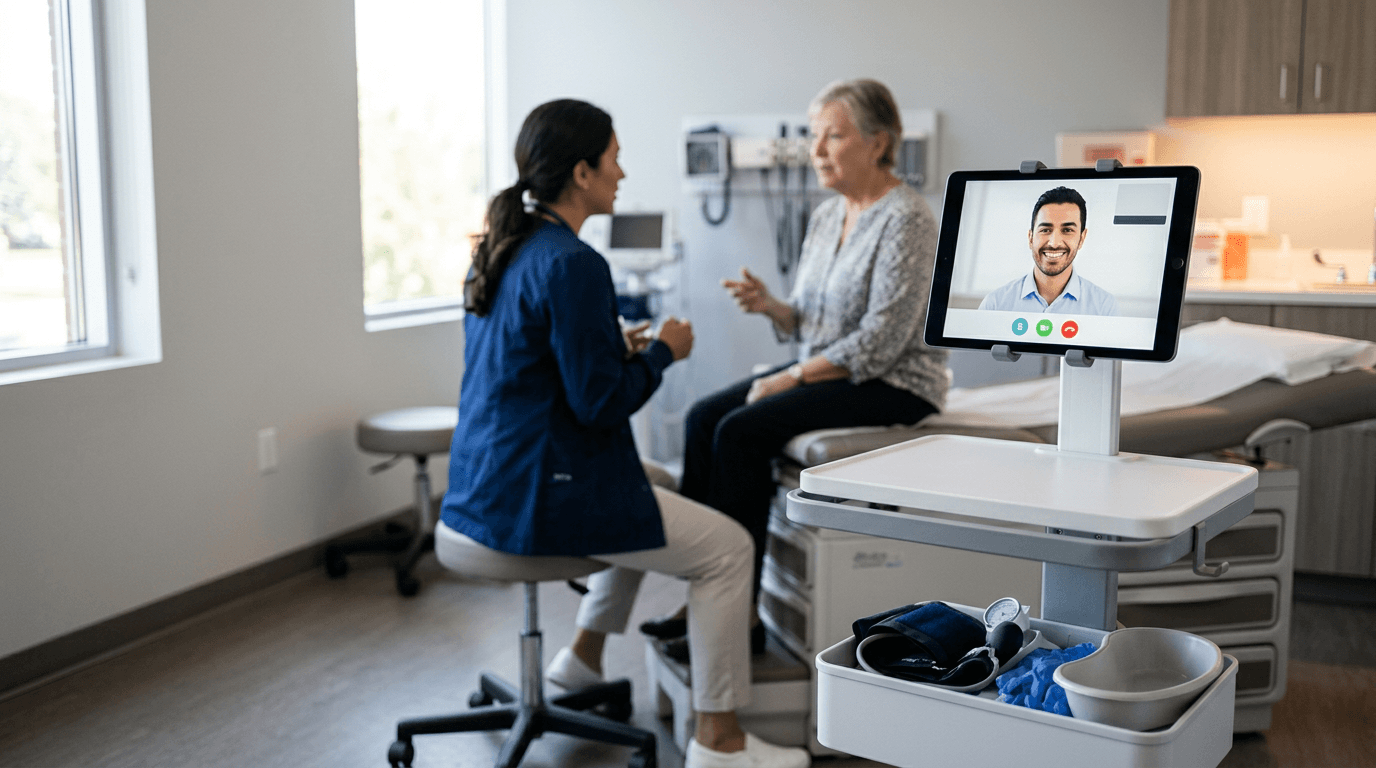
The logistics of language access have historically relied on physical dispatch. Booking an on-site interpreter requires days of notice, making it useless for acute emergencies. To bridge this gap, institutions relied on telephone audio. However, when evaluating modern interpreter services victoria, health networks are increasingly shifting toward Video Remote Interpreting (VRI) to capture the visual data missing from telephone calls.
Legacy frameworks, such as traditional tis translation services, have historically relied heavily on telephone connections. While audio is sufficient for simple transactional conversations - such as booking an appointment or paying a fine - it is dangerously inadequate for clinical diagnostics. A physician relies heavily on visual cues: the wince of pain when a joint is moved, the confusion in a patient's eyes, or the physical symptoms of a stroke. Telephone interpreters cannot see these cues, and therefore cannot inform the doctor if the patient appears to be nodding in agreement while looking entirely confused.
VRI operates on a platform model, similar to rideshare algorithms, immediately connecting a practitioner's tablet or computer to the nearest available certified professional. This provides the speed of telephone access with the safety of visual context.
However, on-site interpreting remains mandatory for specific scenarios. Severe mental health crises, highly sensitive legal depositions, and interactions involving patients with severe sensory impairments require a physical presence. The interpreter uses physical positioning - sitting slightly behind and to the side of the patient - to ensure the patient maintains direct eye contact with the doctor, not the interpreter.
Modality Comparison Table
| Modality | Deployment Speed | Visual Context | Liability Risk | Best Used For |
|---|---|---|---|---|
| Telephone (Audio) | Under 2 minutes | None | Moderate | Transactional tasks, appointment booking, basic inquiries. |
| Video Remote (VRI) | Under 2 minutes | High | Low | Emergency medicine, acute clinical assessments, remote consults. |
| On-Site Accredited | 24 - 48 hours | Maximum | Lowest | Mental health crises, complex legal trials, sensory impairments. |
| Ad-Hoc Bilingual Staff | Immediate | High | Critical | Never recommended for clinical or legal consent. |
FAQ
Can bilingual healthcare staff act as interpreters during emergencies? No. Unless the staff member holds specific medical interpreting credentials, using them introduces severe clinical risk. They lack the training to remain neutral, often answer on behalf of the patient, and rarely possess the exact clinical vocabulary required in both languages to ensure informed consent.
What is the clinical difference between telephone and video interpreting? Video Remote Interpreting (VRI) allows the interpreter to observe non-verbal cues, such as a patient wincing in pain or looking confused despite saying "yes." Telephone interpreting strips away all visual context, making it much harder to verify true comprehension during complex medical or legal explanations.
How do courts verify the accuracy of a translated testimony? Courts rely entirely on the accreditation of the practitioner. Sworn interpreters are officers of the court bound by strict ethical codes. If the accuracy is challenged, the court may review audio recordings with a second credentialed interpreter, which is why absolute fidelity to the original tone and phrasing is legally mandated.
Does video remote interpreting meet patient confidentiality standards? Yes, provided the platform is built for institutional use. Professional interpreting platforms operate under strict governance, requiring adherence to the platform's privacy policy that prevents third-party data retention and ensures sessions are end-to-end encrypted and never recorded without explicit legal consent.
Recommended Reads
- LINGUA FRANCA HUB - The central platform connecting corporate institutions and individual users with on-demand credentialed human interpreters for high-stakes clinical and legal environments.
- Log In to Lingua Franca Hub | Secure Account Access - Direct portal access for initiating immediate video remote interpreting deployments or managing pre-booked professional language sessions.