The fundamental difference between interpreter and translator roles
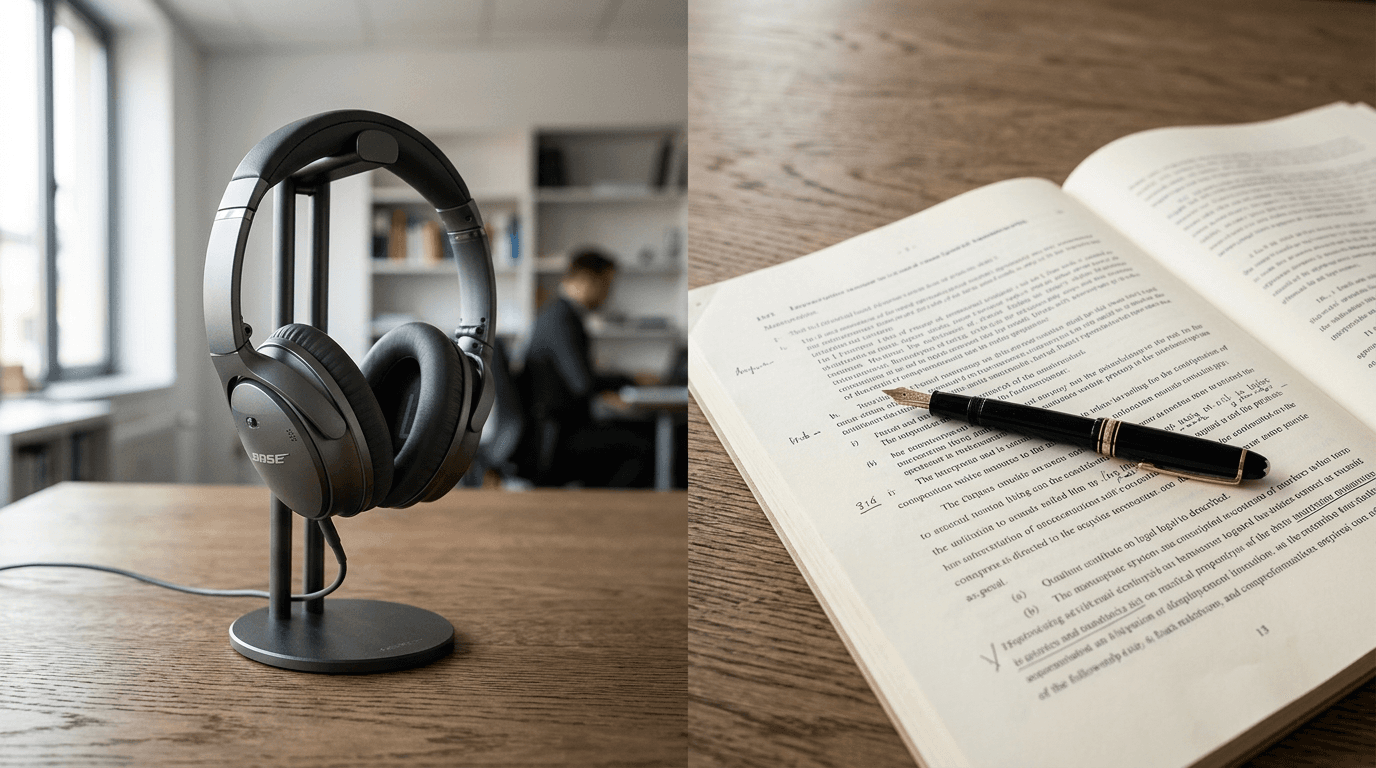
The most common administrative failure in multilingual business operations happens before a single word is exchanged: handing a 50-page legal contract to an interpreter, or expecting a document translator to facilitate a live medical consultation. Both professionals work across language barriers, but assuming they do the same job is like assuming a commercial pilot can repair the jet engine simply because both work in aviation. Understanding the exact difference between interpreter and translator roles dictates whether a hospital avoids a malpractice suit, a court upholds a testimony, or a business successfully negotiates a cross-border merger.
Quick Summary
The difference between an interpreter and a translator lies entirely in the medium of communication and the time available to deliver it. Interpreters convert spoken or signed language in real-time, relying on memory and immediate cognitive processing, while translators convert written text asynchronously, using reference materials and glossaries to achieve precise structural accuracy.
- Interpreters work live, managing immediate dialogue without dictionaries.
- Translators work with written text, prioritising exact terminology and formatting.
- Interpreting requires exceptional short-term memory and public speaking skills.
- Translation demands deep grammatical expertise and cultural localisation research.
- Mixing the roles compromises legal compliance and communication accuracy.
Table of Contents
- The defining boundary: Time and medium
- Mechanics of cognitive load and delivery
- Comparison Table: Interpreter vs translator
- When the stakes demand a spoken linguist
- Why written translation cannot be rushed
- Blurring the lines: The sight translation trap
- FAQ
- Recommended Reads
The defining boundary: Time and medium
The absolute barrier separating these two professions is the delivery medium. Translators deal exclusively with written text. They read a source document, research the terminology, and produce a written target document. This is an asynchronous process. A translator might spend an hour refining a single paragraph of a complex corporate liability clause, ensuring the legal weight of the target language exactly matches the original text. They have access to Computer-Assisted Translation (CAT) tools, industry glossaries, style guides, and the time required to consult subject-matter experts.
Interpreters deal with spoken language or sign language in real-time. They operate without safety nets. When an oncologist explains a complex treatment plan to a non-English speaking patient, the interpreter must instantly comprehend the medical terminology, retain the information, translate the concepts mentally, and articulate them accurately in the target language. There is no pause button for a dictionary check. The interpreter's output must carry the tone, urgency, and precise medical context of the original speaker, delivered often within milliseconds of the speaker pausing.
This difference dictates hiring practices. A professional who holds a certification for translating written birth certificates is not automatically legally permitted or practically equipped to interpret verbal testimonies in a courtroom.
Mechanics of cognitive load and delivery
The distinction goes far beyond the tools used on a desk. The neurological demands of interpreting and translating require entirely different skill sets, training pathways, and certification standards.
Simultaneous and consecutive processing
Interpreters generally work in two primary modes, both of which require immense cognitive stamina. In consecutive interpreting, the speaker talks for a short segment - usually ranging from a few sentences to a few minutes - and then pauses. The interpreter relies heavily on specialised note-taking techniques to capture concepts and data points, not verbatim words. They then deliver the message in the target language. This is standard in medical consultations, police interviews, and small business meetings.
In simultaneous interpreting, the interpreter speaks almost concurrently with the original speaker, usually sitting in a soundproof booth listening through a headset. They must listen, comprehend, translate, and speak the target language while simultaneously listening to the speaker's next sentence. The cognitive load is so severe that simultaneous interpreters typically work in pairs, switching every twenty to thirty minutes to prevent mental fatigue from degrading accuracy.
Practical rule: Never expect a consecutive interpreter working a complex negotiation to operate continuously for more than an hour without a scheduled cognitive break; accuracy drops precipitously after this point regardless of their fluency.
The translator's asynchronous workflow
Translators, conversely, manage cognitive load over days or weeks. Their challenge is not immediate recall, but structural perfection. A translator working on an engineering manual must ensure that torque specifications, material grades, and procedural warnings are flawlessly converted so that the resulting document meets entirely different national safety standards.
Their workflow involves initial comprehension, drafting, editing, proofreading, and formatting. They utilize translation memory software to ensure consistency across hundreds of pages. A translator might debate the nuance of a single verb for a marketing campaign to ensure it does not inadvertently insult a local culture, a luxury of time an interpreter never possesses.
Comparison Table: Interpreter vs translator
| Feature | Interpreter | Translator |
|---|---|---|
| Medium | Spoken or signed language | Written text |
| Delivery Time | Real-time (simultaneous or consecutive) | Asynchronous (days or weeks) |
| Core Tools | Note-taking, memory, headsets | CAT tools, dictionaries, glossaries |
| Key Skill | Immediate recall, public speaking, active listening | Deep reading, writing fluency, cultural research |
| Output Precision | Conceptual equivalence and tone | Exact terminological and structural accuracy |
| Working Environment | On-site, hospitals, courts, video remote platforms | Offices, remote workstations |
When the stakes demand a spoken linguist
Choosing the right linguistic professional is fundamentally a risk management decision. Spoken communication scenarios require individuals trained specifically in oral delivery and crisis management. When assessing interpreter vs translator requirements, you must evaluate the operational reality of the encounter.
In healthcare environments, the need for immediate, nuanced verbal exchange is critical. A patient detailing pain symptoms or giving informed consent requires an interpreter who can navigate regional dialects, emotional distress, and highly technical medical jargon on the fly. Relying on bilingual staff or attempting to read translated pamphlets fails because it removes the dynamic, questioning nature of a medical diagnosis. For urgent or geographically isolated situations, modern infrastructure allows organisations to access Lingua Franca Hub | On-Demand Interpreting Services to instantly connect with credentialed professionals via video or audio links.
Similarly, legal environments mandate strict adherence to interpreting protocols. An interpreter in a courtroom is legally bound to interpret precisely what is said, including hesitations, grammatical errors, and vulgarities, without adding context or smoothing out the speaker's narrative. Their role is to provide a voice, not an editorial polish.
Why written translation cannot be rushed
The expectation that a bilingual employee can quickly "translate" a legal or technical document over a lunch break consistently leads to costly compliance failures. Document translation requires a methodical approach to syntax, cultural nuance, and industry-specific regulations.

When a company localises its terms of service for the Australian market, the translator must ensure the language aligns with the Australian Consumer Law. A direct, literal translation of a foreign legal concept often holds absolutely no legal weight in the target jurisdiction. Translators essentially bridge legal systems, not just vocabularies. They must account for formatting, typography, and even the direction of the text for languages like Arabic or Hebrew.
Furthermore, translators handle the unseen metadata of business communication. They adapt software user interfaces, localize SEO keywords for international marketing, and ensure that technical schematics are readable by foreign contractors. This requires a forensic attention to detail that is structurally incompatible with the rapid-fire environment of live interpreting.
Blurring the lines: The sight translation trap
There is one specific scenario where the two disciplines collide, often disastrously: sight translation. This occurs when an interpreter is handed a written document - such as a consent form, a lease agreement, or a witness statement - and asked to read it aloud in the target language immediately.
While highly trained interpreters can perform basic sight translation for short, standard documents, it forces a professional to operate outside their primary medium. The cognitive strain of reading complex legal text and instantly converting it into fluent spoken language without preparation drastically increases the risk of omission or structural error. A 10-page commercial lease cannot be sight-translated accurately in a meeting room.
Practical rule: If a document exceeds two pages or contains binding liability clauses, it must be sent to a professional translator prior to the meeting, rather than relying on an interpreter to sight-translate it live.
Understanding the exact parameters of these roles protects all parties involved. A business that requires ongoing linguistic support must architect a workflow that utilizes both disciplines correctly: commissioning translators for the foundational contracts and manuals, and securing professional interpreters for the live negotiations and daily operational dialogues.
FAQ
What is the difference between a translator and an interpreter?
A translator converts written text from one language into another, working asynchronously with reference tools to ensure perfect structural and grammatical accuracy. An interpreter converts spoken or signed language in real-time, relying on short-term memory, active listening, and immediate linguistic processing to facilitate a live conversation.
Can someone be both an interpreter and a translator?
Yes, but it is uncommon at the highest professional levels. While some linguists hold dual certifications, the skills required are fundamentally different. Interpreting requires public speaking and rapid processing, while translation demands meticulous research and written fluency. Professionals usually specialise in one medium.
What is the difference between an interpreter and a translator when it comes to legal compliance?
Translators provide certified, written documents that are accepted by government bodies, courts, and universities as legally binding equivalents of the source text. Interpreters are bound by codes of ethics to deliver accurate verbal renditions during live proceedings, often taking a legally binding oath before a trial, but they do not produce written certified records.
Do interpreters use software to help them work?
While interpreters use digital platforms for remote video or audio delivery, they do not use translation software during live sessions. They may use digital glossaries for preparation, but during the actual assignment, they rely entirely on their cognitive abilities and note-taking. Translators, however, heavily rely on Computer-Assisted Translation (CAT) tools.