When Free AI Translation Fails: The Risks in Medical and Legal Settings
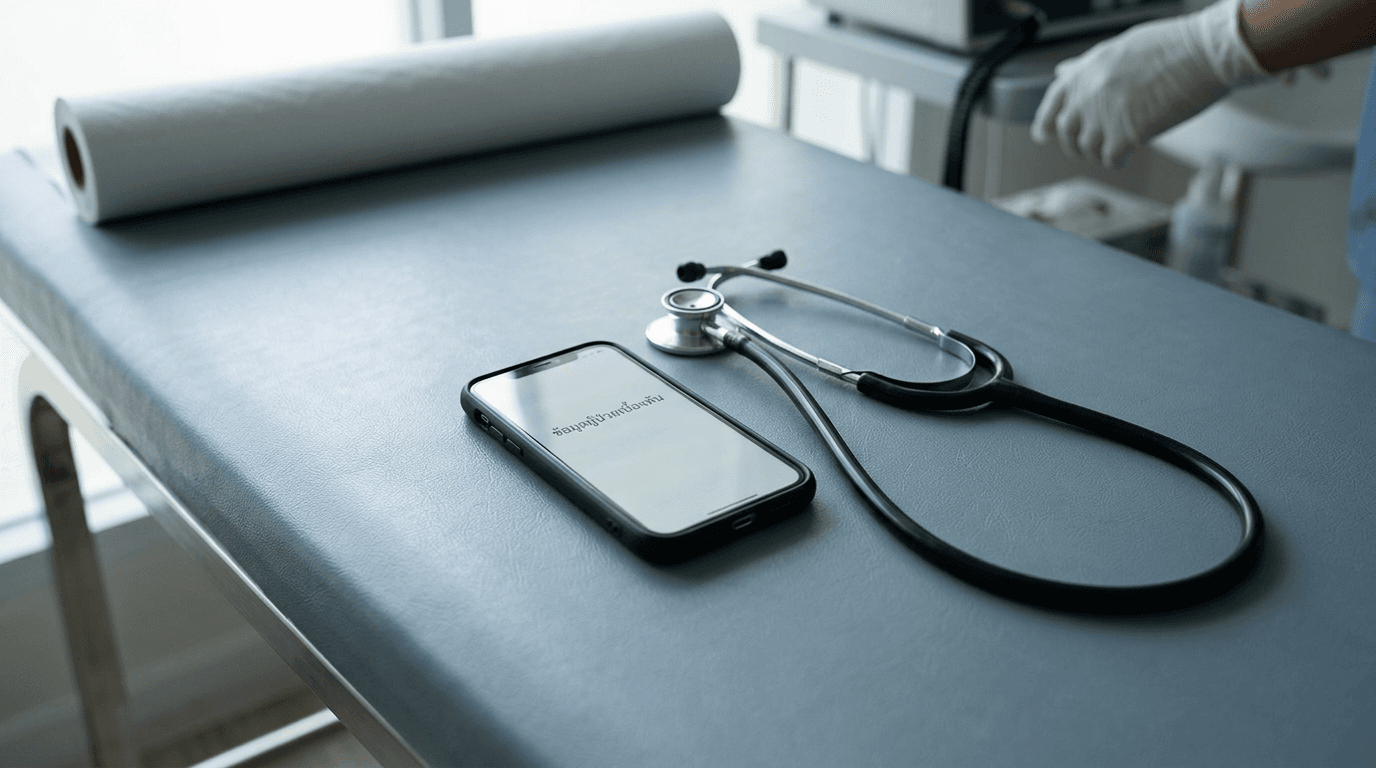
A clinician holds a smartphone between themselves and a patient, waiting for a synthetic voice to relay the details of an oncology report. The app processes the audio, strips away the clinician's reassuring tone, and outputs a literal, disjointed string of words that terrifies the patient. This is the reality of deploying free AI translation tools in high-stakes environments. While these applications are exceptional for ordering coffee or navigating a foreign transit system, they strip human communication of its essential context. Using AI translation free applications in clinical or legal settings replaces professional accountability with algorithmic guesswork. The distinction that matters is not between software and human, but between low-stakes convenience and high-stakes liability.
Quick Summary
Free automated translation relies on probabilistic models that excel in predictable, casual exchanges but fail abruptly when context, nuance, or liability matter. For serious matters, algorithmic convenience cannot replace professional accountability.
- Machine learning models predict words based on training data, stripping away tone and cultural context.
- Medical and legal environments require absolute precision, where a single mistranslated word alters consent or testimony.
- AI tools lack the capacity to ask clarifying questions when a speaker uses ambiguous phrasing.
- Human interpreting remains the only legally and medically defensible method for complex, consequential dialogue.
Table of Contents
- Where Free AI Translation Fails You
- How Machine Learning Handles Real-Time Speech
- Why Context Breaks Algorithmic Models
- The Hidden Cost Of AI Mistakes In Healthcare
- Legal Consequences Of Automated Misinterpretation
- When To Rely On Human Interpreting
- Comparing High-Stakes Accuracy
- FAQ
- Recommended Reads
Where Free AI Translation Fails You
Language is not a mechanical input-output system. Unlike a free binary translator that reliably converts ones and zeros into executable code without ambiguity, spoken human language is dense with implied meaning, regional idioms, and emotional subtext. When you feed spontaneous speech into a consumer-grade translation application, the software does not understand what you mean; it merely calculates the statistical probability of the next word based on its training corpus.
This probabilistic approach creates an illusion of fluency. The output often sounds grammatically correct, which convinces the user that the translation was accurate. However, fluency and accuracy are entirely different metrics. A neural network will confidently output a perfectly structured sentence that means the exact opposite of what the speaker intended, simply because the training data favored a specific syntactic pattern.
In casual scenarios, this discrepancy is harmless. If a tourist uses an app to ask for directions and the system translates "train station" as "railway terminal," the outcome is successful. But when a lawyer uses the same underlying technology to negotiate a contract, or a social worker uses it to assess a child's safety, the failure modes become catastrophic. The failure does not announce itself with an error code; it presents as a smooth, confident misrepresentation of reality.
How Machine Learning Handles Real-Time Speech
To understand why consumer translation fails in critical settings, you must unpack the mechanics of how it processes live audio. The system performs three distinct, highly fragile steps in milliseconds. First, an Automatic Speech Recognition (ASR) module attempts to transcribe the audio into text. Second, a Neural Machine Translation (NMT) engine translates that source text into the target language text. Finally, a Text-To-Speech (TTS) module reads the translated text aloud.
Errors compound at each stage. If the ASR module mishears "hypotension" (low blood pressure) as "hypertension" (high blood pressure) due to background noise or a regional accent, the NMT engine translates the wrong word perfectly. The software has no mechanism to flag that the patient's symptoms do not align with the transcribed word. It operates blindly on the text string it receives.
Furthermore, these systems require complete sentences to function effectively. Human beings rarely speak in complete, grammatical sentences during stressful, real-time conversations. We pause, restart, use filler words, and leave thoughts hanging. NMT engines struggle to resolve incomplete syntax. They often guess the ending of a sentence to force a coherent output, completely fabricating the second half of the speaker's statement. This is a known phenomenon called "hallucination" in machine learning architecture, and it renders real-time automated translation inherently unsafe for unscripted, high-consequence dialogues.
Practical rule: Never use sequential translation software for any conversation where you need the listener to make a legally binding decision or give informed medical consent.
Why Context Breaks Algorithmic Models
Context is the invisible architecture of a conversation. It includes the relationship between the speakers, the physical environment, the history of the discussion, and the cultural background of the participants. Algorithms possess zero contextual awareness. They evaluate a sliding window of the last few dozen words spoken and nothing else.
Consider the word "positive." In a business meeting, a "positive" trend in revenue is excellent news. In a pathology clinic, a "positive" biopsy result is devastating. An algorithm trained heavily on general web data will default to the most statistically common usage of a word. If a doctor says, "The results are positive," the software may deliver the translation with a synthetic tone of cheerful congratulation, violating every standard of clinical empathy and confusing the patient.
Specialised asynchronous tools are beginning to handle narrow contexts better, but they are built for entirely different workflows. For instance, using the HeyGen AI video translator allows creators to carefully script, review, and edit marketing videos before publishing. The user verifies the output before anyone sees it. In a live hospital ward or a bustling police station, there is no time for review. The words are delivered instantly, and the damage of a contextual failure is immediate.
The Hidden Cost Of AI Mistakes In Healthcare
The clinical environment exposes the fundamental flaws of automated translation systems more brutally than any other setting. Healthcare relies on diagnostic precision, informed consent, and therapeutic rapport. When practitioners substitute credentialed interpreters with free translation software, they compromise all three pillars simultaneously.

The most dangerous AI mistakes in healthcare are those that alter dosages, medication instructions, or symptom descriptions. If a patient describes a "dull ache" in their chest, but the software translates it as a "severe tearing sensation" because of an idiomatic quirk in their native dialect, the clinical team may activate an emergency surgical protocol for an aortic dissection instead of treating a minor musculoskeletal issue. Conversely, downplaying a symptom through translation can lead to fatal delays in care.
Informed consent is a legal requirement in Australian healthcare. To consent to a procedure, a patient must fully understand the risks, benefits, and alternatives. A machine translation log does not hold up in court or before a medical tribunal as proof of informed consent. If a patient experiences a complication they did not understand they were agreeing to, the liability rests entirely on the healthcare provider who chose to use an unverified consumer app instead of a professional interpreting service. If you manage a clinic and need to integrate reliable language access, reviewing the options at Lingua Franca Hub | On-Demand Interpreting Services provides a baseline for what professional compliance looks like.
Practical rule: Treat any symptom described through a consumer translation app as unverified hearsay until confirmed by a bilingual clinician or a credentialed interpreter.
Legal Consequences Of Automated Misinterpretation
The justice system operates on the exact definition of words. Statutes, contracts, witness testimonies, and police interviews are constructed with deliberate linguistic precision. Introducing an algorithmic black box into this environment creates an immediate chain of custody problem for the evidence.
When a police officer uses a phone app to question a witness at a scene, the resulting translation is legally compromised. The defence can rightly argue that the software hallucinates, fails to process regional dialects, and cannot be cross-examined. A machine cannot swear an oath to translate faithfully, nor can it explain its reasoning when challenged on a specific semantic choice. In Australian courts, interpreting is a regulated profession precisely because the interpreter acts as an officer of the court, bound by strict codes of ethics regarding impartiality and accuracy.
Furthermore, confidentiality is entirely stripped away by consumer translation platforms. When you speak into a free app, the audio data and text strings are transmitted to external servers, often processed overseas, and frequently logged to train future iterations of the model. Discussing a sensitive corporate merger, a child custody arrangement, or a criminal allegation through these tools represents a severe breach of client privilege and data privacy regulations. Organisations must strictly govern how they handle client data, as outlined in frameworks like the Privacy Policy | Lingua Franca Hub, which protect sensitive interactions from unauthorised data harvesting.
When To Rely On Human Interpreting
The distinction between when to use software and when to deploy human interpreting is governed by the concept of liability transfer. When you use software, you assume all the liability for its errors. When you engage a credentialed professional, you rely on a regulated practitioner trained to manage the risks of cross-cultural communication.
Humans perform tasks that machines cannot. A professional interpreter reads body language to gauge whether the listener actually understands the concept, not just the words. If a clinician explains "palliative care," the interpreter knows that a literal translation might mean nothing to someone from a culture where the concept does not exist. The human interpreter stops, informs the clinician that the concept does not translate directly, and asks the clinician to explain the process so it can be conveyed accurately.
This capacity to intervene, clarify, and bridge cultural gaps is what makes human practitioners indispensable. For environments that need secure, immediate access to these professionals without maintaining in-house staff, systems exist to facilitate the connection. You can Log In to Lingua Franca Hub | Secure Account Access to route your urgent requirements directly to a certified specialist. Rely on professionals for any scenario involving health, legal rights, financial contracts, or situations where a misunderstanding could result in physical, emotional, or reputational harm.
Comparing High-Stakes Accuracy
To make an informed decision about language access, practitioners must evaluate the tools across the specific dimensions that matter in high-liability environments.
| Capability Dimension | Free Automated Apps | Professional Human Interpreting |
|---|---|---|
| Syntactic Accuracy | High for standard dialects; poor for regional variants. | Exceptionally high across diverse regional dialects. |
| Contextual Awareness | Zero. Evaluates only the immediate text string. | High. Reads the room, tone, and cultural background. |
| Clarification Ability | None. Guesses output when input is ambiguous. | Pauses and asks the speaker to clarify ambiguous terms. |
| Data Security | Poor. Audio is often harvested for model training. | High. Bound by strict confidentiality agreements and ethics. |
| Legal Defensibility | None. Cannot be verified or cross-examined. | Absolute. Practitioners are credentialed and accountable. |
| Best Use Case | Casual tourism, ordering food, basic directions. | Medical consent, court hearings, contract negotiations. |
FAQ
Why do free translation apps seem so accurate when I test them?
They are highly optimised for common, predictable phrases found in their training data. When you test them with standard sentences in a quiet room, they perform well. They fail during unscripted, stressful, or highly technical dialogues.
Can I use a translation app if I only need to convey basic medical instructions?
No. Basic instructions often contain critical nuance regarding dosage or timing. A mistranslation of "take once a day" versus "take one pill a day" can cause severe harm. Always use a professional for medical directives.
Does automated translation protect client confidentiality?
Generally, no. Free consumer applications process your voice data on external servers and often retain the data to improve their algorithms, directly violating professional confidentiality standards in law and healthcare.
How does an interpreter handle concepts that do not exist in the target language?
A human practitioner will alert the speaker that there is no direct equivalent, explain the cultural discrepancy, and ask the speaker to describe the concept so it can be accurately conveyed through descriptive translation.
Are there any professional settings where AI translation is acceptable?
It is acceptable for translating static, low-risk reference text (like a cafeteria menu) or for gaining the general gist of a foreign language email before sending it to a human for formal translation. It is never acceptable for live, high-stakes dialogue.